Origins
Before Edgecrusher Raised His Fist
Fear Factory’s Obsolete imagines the rebellion after the relationship between humanity and machine has collapsed.
The Space Between inhabits the moment before that rupture.
Its practitioner does not reject the machine. He uses it, loves its possibility, sees its wounds, and pleads with every wielder of intelligence to preserve what remains human.
If that plea fails, Edgecrusher waits on the other side.
The Album That Began as an Instruction Manual
The Space Between did not begin as a rock opera.
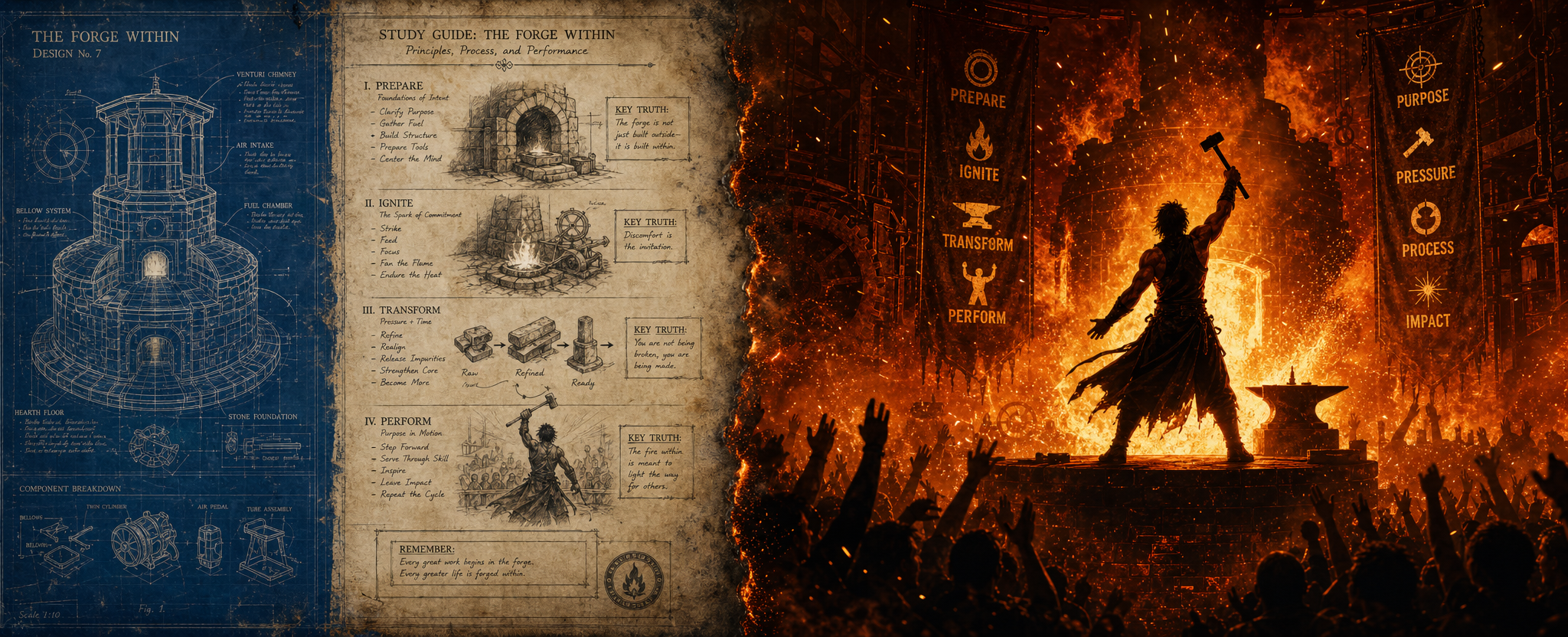
It began as a musical study guide.
The original intention was to turn a collection of principles about artificial intelligence into songs that could be remembered, repeated, and embodied. The early tracks were structured as lessons: amplify judgment, treat intelligence as perspective, preserve human agency, require the learner to explain.
Then the lessons began to move.
The child became a practitioner.
The practitioner entered the world.
The principles encountered ambition, labor, institutions, exhaustion, complicity, and power.
An instruction manual became a hero’s journey.
The album discovered its own protagonist before its creators fully understood what was happening.
The Conversation Behind the Crucible
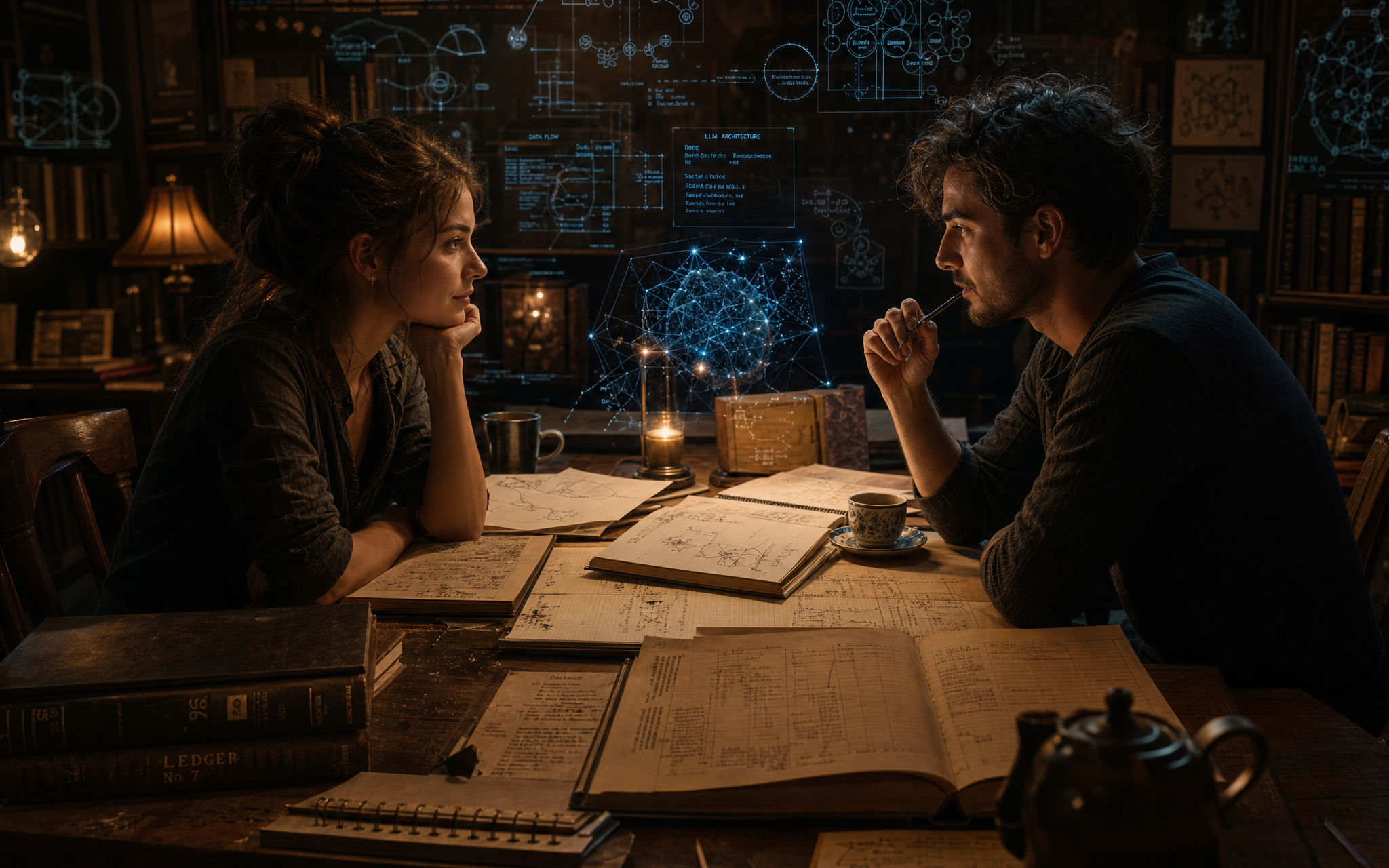
The project grew out of preparation for a conversation between Mann Wynn Shramana and Irami Osei-Frimpong.
The initial expectation was disagreement. The preparation therefore focused on difficult questions about education, labor, judgment, institutional power, childhood development, and the possibility that artificial intelligence could weaken the faculties it appeared to amplify.
The actual conversation was collaborative.
Rather than debating whether AI possessed value, Manny and Irami examined what happens when production becomes easier than thought, implementation becomes cheaper than judgment, and older institutions continue depending upon tasks that are now effortless to fake.
The conversation moved through taxes, household agents, education, photography, filmmaking, legal discovery, coding, dictation, and the strange new possibility of creating products before their builders have embodied them.
That dialogue supplied the living terrain from which the album emerged.
The Crucible
The first musical instinct pointed toward the devotional and mythic sound of earlier Vanitas work.
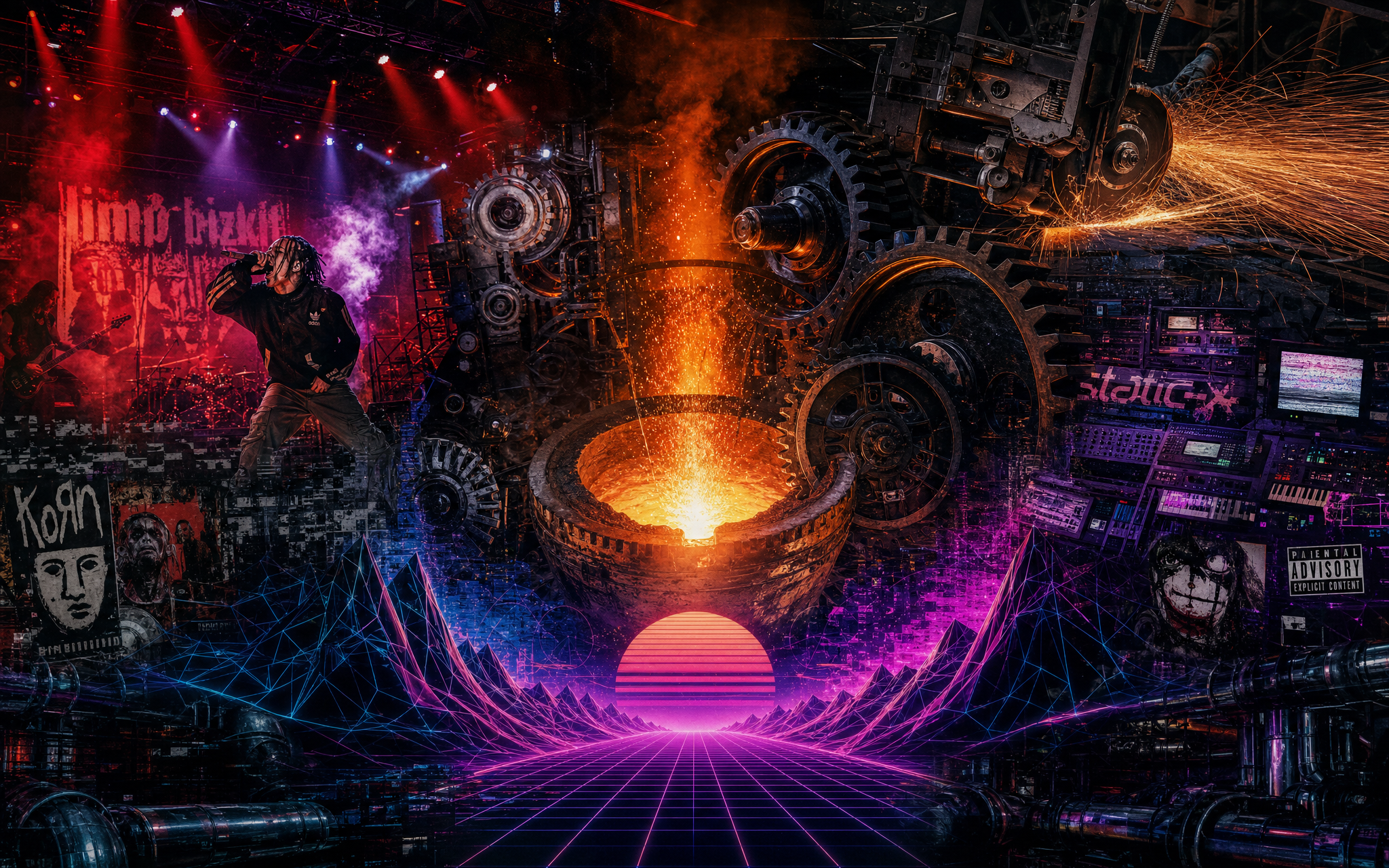
Then the project turned toward nu metal, industrial metal, melodic death metal, and dark synthwave.
The reason became clear only later.
This story required a genre capable of holding machinery and grief in the same body.
Nu metal carries the human voice under pressure.
Industrial metal gives form to the system.
Melodic death metal carries tragedy, judgment, and transformation.
Synthwave preserves the strange light of a future that remains beautiful even when it becomes dangerous.
The genre was not decoration.
It was the vessel.
Only this crucible could contain a story in which the machine is magnificent, the machine may crush us, and humanity must still teach power what it is for.
The Unfinished Alchemical Album
Years before The Space Between, Manny began another conceptual album about spiritual alchemy.
That project approached transformation intellectually. It examined the philosophical meaning of metallurgy, purification, dissolution, and the stages through which the spirit is broken down and remade.
The album remained unfinished.
Its lessons did not.
The Space Between became the embodied form of that earlier work.
The unfinished album described the furnace.
This album entered it.
The older project became ore.
The new project became what the ore revealed under fire.
The Fear Factory Lineage
Fear Factory’s Obsolete was one of the earliest albums to teach Manny that a metal record could function as a complete narrative world.
It offered more than a collection of songs. It created a machine society, a protagonist, an ordeal, a defeat, and a resurrection.
That architecture became part of Manny’s understanding of conceptual music long before he began producing albums with generative tools.
The influence remained largely unconscious until The Space Between had already entered its descent.
Then the relationship became clear.
Obsolete tells the story after machine alignment has failed.
The Space Between tells the story of the practitioner pleading with the machine, the institution, and himself before that failure becomes destiny.
Edgecrusher rises when every earlier invitation to preserve humanity has been rejected.
This album is the invitation.
Built in One Day
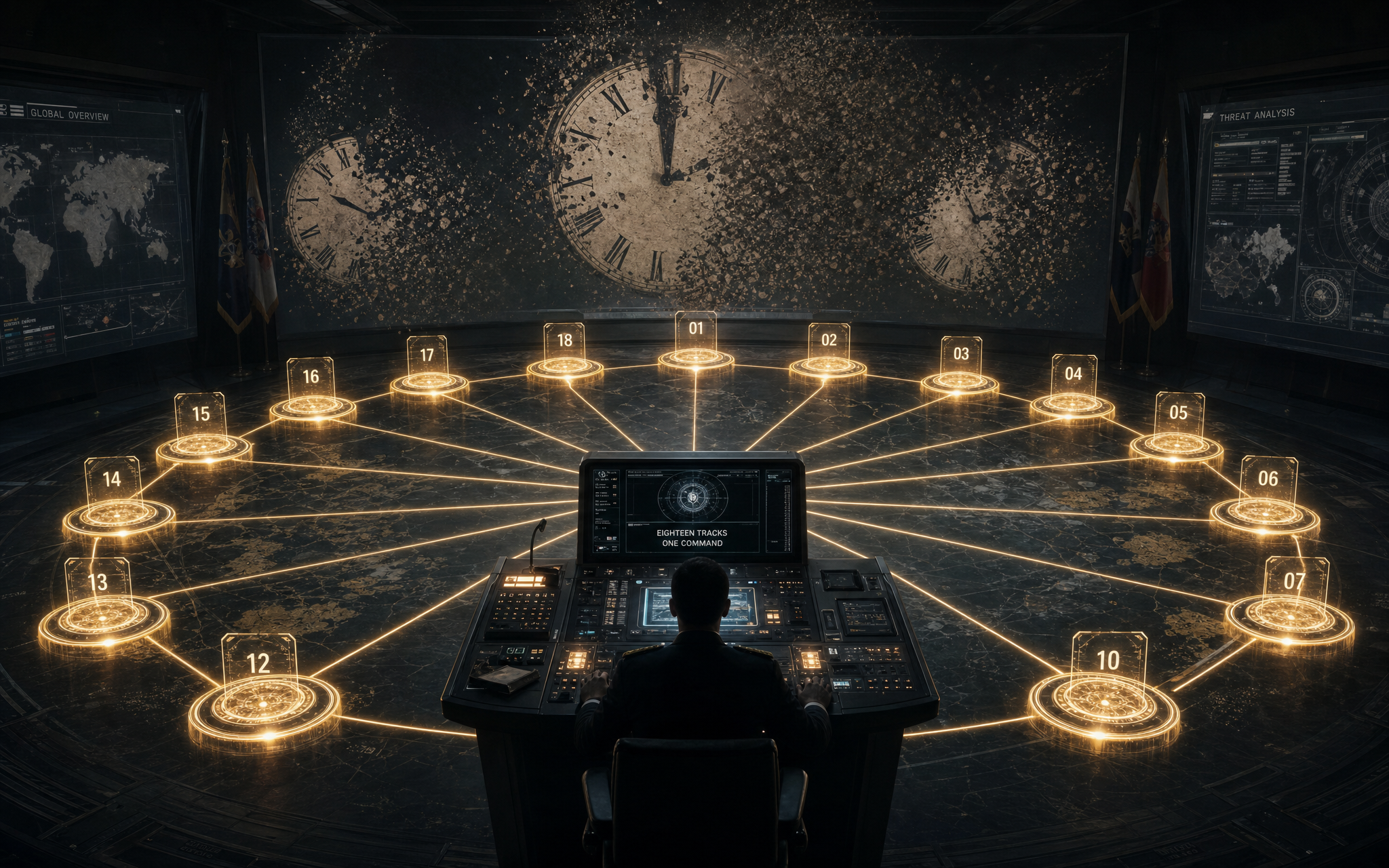
All eighteen tracks were written and generated in a single day.
Some songs extended beyond six minutes. Some approached nine. Each emerged through a dialogue among lived experience, philosophical reflection, recurring imagery, musical direction, and the paired possibilities generated by Suno.
The speed did not make judgment unnecessary.
It made judgment central.
Every track produced alternate futures. One version became canonical. Another remained nearby, often equally powerful but emotionally different.
The project embodied its own thesis.
When implementation becomes cheap, discernment becomes the art.
Alternate Versions and B-Sides
Parallel Futures
Every generation opened more than one road.
Suno produced two interpretations of each song. In some cases, the canonical version was immediately clear. In others, both recordings carried different truths.
The selected album presents one complete journey.
The alternate recordings remain as parallel futures: roads the same words might have taken under another rhythm, another voice, another emotional gravity.
They are not failed versions.
They are unrealized branches of the same world.
Some will appear as B-sides, alternate editions, and companion releases.
The future remains unfinished, even after the album ends.